On The Master’s Tools Will Never dismantle the
Master’s House the overarching message that I took was that no matter how women
were “positively” portrayed through the Master’s House things will always stay
the same. Even if they were being heard by them, that didn’t mean change was
coming their way for a better life as they thought so. For example, on the book
This Bridge Called My Back, the
following quote was stated, “For the master’s tools will never dismantle the
master’s house. They may allow us temporarily to beat him at his own game, but
they will never enable us to bring about genuine change” (Lorde, pg 95);
meaning that change was nowhere to be find for these women as they hoped for. Sadly,
these women depended on the Master’s House for hope and support that wasn’t there
for them for comfort, as I found the following quote from This Bridge Called My Back; “And this fact is only threating to
those women who still define the master’s house as their only source of support”
(Lorde, pg 95). Again this only makes me question, how much are these women
really willing to fight for what they want? I believe that in order for women
to actually make a change, every single woman had to fight as one team
regarding their skin color, education level, economic status, sex preference
and so on, in order to succeed and make change.
Connecting to messages
from And When You Leave Take Your Pictures With You and The Master’s Tools Will
Never Dismantle the Master’s House I was able to see and feel the racism
towards these women of color. Not only was it enough to be a woman of color but
coming and being from a lower class made it even worse for them. As I read the
section And When You Leave Take Your Pictures With You I absolutely felt the
anger towards the “white privileged women” that are lucky to be so without even
them recognizing it and expecting the rest to “educate” them about women of color.
From the book, This Bridge Called My
Back, I found this quote which ties up on what I have mentioned before; “Women
of color do not have such power, but white women are born with it and the
greater their economic privilege, the greater their power. This is how white
middle-class women emerge among feminist ranks as the greatest propagators of
racism in the movement” ( Carrillo, pg 58). Also, from The Master’s Tools
reading I saw how again, it was the blacks and third world women task to
educate white women about their existence which I totally disagree with because
can they be aware of it and actually do something about it? Can the see how
much of humans they are too?. “Now we hear that it is the task of black and
third world women to educate white women, in the face of tremendous resistance,
as to our existence, our differences, our relative roles in our joint survival.
This is a diversion of energies and a tragic repetition of racist patriarchal
thought” (Lorde, pg 96).
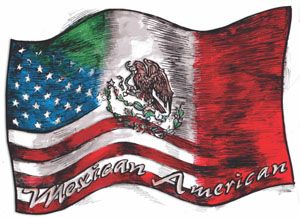
Why is it that in order
to be “accepted” as an American we, Hispanics, should speak English the right
way with no accent? This was the first thought that came to my mind as soon as I
started reading the passage, How to Tame a Wild Tongue from the book, Borderlands La Frontera. Coming from a
Mexican-American family growing up in Tijuana, Baja California, migrating to El
Paso, Texas made me acquired all these extra language rules in order to fit in.
For example, by all means I was not supposed to speak Spanish in the classroom
in order to master the English language and speak it fluently as I remember my
fifth grade teacher telling me. Of course, there I was listening to them and
doing so since I didn’t know better. However, it now makes me angry because
instead they couldn’t acknowledge the fact that I was bilingual? That I knew
two languages rather than one, but they were too busy worrying about my Mexican
accent. As I entered middle school, I started speaking Spanglish which was
worse since my own family would even judge me and make fun of me but it was tto
hard to remember all the words to one language, my brain automatically gave
me words in both languages and that’s how
I was speaking. Finally, I was able to agreed and identified myself with the
following quote from Borderlands La
Frontera, “For a people who are neither Spanish nor live in a country in
which Spanish is the first language; for a people who live in a country in
which English is the reigning tongue but who are not Anglo; for a people who
cannot entirely identify with either standard (formal, Castillian) Spanish nor
standard English, what recourse is left to them but to create their own
language? A language which they can connect their identity to, one capable of
communicating the realities and values true to themselves a language with terms
that are neither espanol ni ingles, but both” (Anzaldua, pg. 77).
References
Anzaldua Gloria. (2017). Borderlands: La Frontera. San Francisco, CA: Aunt Lute Books.
Moraga Cherrie, & Anzaldua Gloria. (2005). This Bridge Called My Back: writings by radical women of color. Albany: State University of New York Press.