Wednesday, December 4, 2019

"Where do I come from?


            Where do I come from? Well I was born in Tijuana, Baja California in 1992. My mother, Guadalupe Ruiz, was born in El Paso, Texas in 1974. My father, Jesus Labra, was born in Chihuahua, Chihuahua. I don’t know much about my father since I have recently communicated with him after so many years. However, I don’t have any type of communication with his family. My grandmother from my mom’s side past away when she was about 5 years old and therefore, she had no communication with her mom’s side of family ever since so sadly I don’t know anyone from that side of her family.
Maria Ruiz & Jose Alvarez            Martin Ruiz & Vicenta Hernandez
 (great great grandparents)                    (great great grandparents)
      Nieves Alvarez                                   Martin Ruiz
    (great grandmother)                           (great grandfather)
Trinidad Ruiz Alvarez                                                                           Maria Guadalupe Ruiz Reyes
      (grandfather)                                                                                              (grandmother)
                                         

                                                                Guadalupe Ruiz
                                                                     (mother)


            My great great grandparents, parents of my great grandmother, Maria Ruiz and Jose Alvarez were both from Batopilas, Chihuahua. My great great grandparents, parents of my great grandfather, Martin Ruiz was from General Trias, Chihuahua, and Vicenta Hernandez was from San Luis, Potosi. My great grandmother, Nieves Alvarez was also from Batopilas, Chihuahua. My great grandfather, Martin Ruiz was from Santa Eulalia, Chihuahua. My grandfather, Trinidad Ruiz Alvarez was from Santa Eulalia, Chihuahua where he lived since birth to about eleven years old; migrating to Ciudad Juarez, Chihuahua at twelve years old as he prepared to migrate to the United States. My grandmother, Maria Guadalupe Ruiz Reyes was from Durango, Mexico but lived in Ciudad Juarez, Chihuahhua where she met my grandfather.

            In the year 1973 my grandparents were already married with two kids and decided to cross the border illegally for a better future. They were able to cross over to El Paso, Texas and within a year they were able to get their papers and became US citizens. The following year 1974, my mother was born here in El Paso, Texas. She met my father during the year of 1991 in Ciudad Juarez, Chihuahua and ended up moving to Tijuana, Baja California which was where I was born. We stayed there for some years then moved to San Diego, California. Around the year 2002, my brothers and I came to Anthony, Texas with my mom and ever since we have been living here.

            Overall, I was glad I did this blog because I always thought my family members were all from Chihuahua, Mexico. I also enjoyed talking to my grandfather about where we come from since he was able to talk to me for hours. He enjoyed all the questions I asked him and the company spent together.  

"Gender and Sexuality: How Can I Show Up as an Ally?


         Growing up on a Mexican-American household I encountered different feelings and understandings about gender and sexuality. I grew up expecting to play with dolls since I am a female and my brothers were to play with their cars since they are males. My mother, my brothers and I lived with my grandparents for some years so we had to obey their rules. Therefore, we did as they expected, for example, if one of my brothers would play with Barbie’s with us, they would be in trouble since my grandpa would say: “esos juguetes no son de ninos si juega con munecas se va hacer nina” so I had that mentality that girls played with “girl” toys and boys with “boy” toys. My grandparents would always emphasize that our religion which was Catholic at that time did not allowed us to support the “gay” community since according to the bible and God that was not normal nor acceptable.  I was told and taught that men were created to marry women and women were to marry men because it was the right thing. 

            On the other hand, my mom would always tell us that regarding a person’s gender preference we still had to respect them and not judge them. ”A human is a human no matter what”- were my mother’s words. She was not allowed to tell us the opposite from my grandparents since we were under their roof and under their rules. So she couldn’t go against them because of respect. It wasn’t until we moved out of our grandparents’ house and everything changed. My mother gave us the opportunity to express ourselves through the religion and beliefs we wanted to; and that’s how I grew up ever since.

            It wasn’t until I became a mom and everything changed for me. For example, I started noticing how clothing and even toys are almost gender labeled. Boy clothes are all blue and dark colors and girl clothes are more pink and lighter colors. Dolls, Barbie’s, kitchen toys, house appliances toys are on the girls’ aisle. Super heroes, cars, tool toys, weapon toys, dinosaurs are all on the boys’ aisle. In other words, if you are a girl are you expected to play with the toys on that aisle and boys are expected to play with the toys around their aisle? And I became more aware of how society somehow wants us to be either or. As stated in Heidenreich (2006), “In the United States, racialized and gendered ideologies construct what it means to be a man and what it means to be a woman” (p.122); which it goes back to my thinking, sadly all these ideologies we encounter have to meet our gender somehow to determine if we are a man or a woman. I struggle with this because I want to teach my kids how it shouldn’t matter. That if my little girl enjoys playing with dinosaurs and makes her happy, why not let her instead of criticize her. If my little boy likes playing with the kitchen toys, why not let him? Sadly it is our own family who criticize the most. As a mother I care for my kids, as a future teacher I care for my future students, I want them to know that before seeing a person’s “gender” we have to understand that we are humans first, as equal as everyone else in this world.
           In conclusion, I believe I understood and became more literate about the LGBTQ once I was able to express myself through the religion of my choice, and again when I became a mother. Like I said, becoming a mother has made me aware of how no matter what my kids think, like or do I will ALWAYS be there for them no matter what to love and support them. Which I believe that’s how it starts, change starts within our own selves, leading into our families. It breaks my heart to see how many people lose their “personhood” just because they can’t identify with either being a girl or boy. “If a body fits into neither category, or crosses gender lines, it loses gender privilege and is assigned the label “it”, thus signaling a loss of personhood” (p.122); as it is stated by Heidenreich (2006). We need more support for communities like these:


References
Heidenreich, L. (2006). Learning from the Death of Gwen Araujo?-Transphobic Racial Subordination and Queer Latina Survival in the Twenty-First Century. Chicana/Latina Studies, 50-86


Sunday, October 20, 2019

Lincoln Park Midterm Blog

Lincoln Park Murals
            I have lived in El Paso Texas for over more than 15 years and have been to the Lincoln Park one time prior to today’s visit which was with the Utep class. The first time I went it was because my husband and I were invited to a car show about 6 years ago. As we were there I noticed the painted murals and thought they were really cool and interesting. I remember acknowledging every painter since the paintings on the murals looked very nice and detailed to me. However, that was it. I never looked beyond the painting and actually reasoned what they meant or what their message was. Never did I ever felt any emotion towards the murals since I had no idea of what they meant.
            Now that I have taken a Feminism class and I am currently taking this Chicana class I can now say that I saw all the murals with a very different perspective. I couldn’t believe how many different thoughts and emotions I felt towards them. It made me feel proud of my roots, it made me feel as an empowered woman yet not so empowered. It also made me feel happy as well as disappointed. I was able to see a theme which relates to Chicano Culture in the United States; and I also noticed how women played an important role on these murals since majority of them had a woman painted.
            As I started looking at some of the murals one of my favorites was the following:
                        

As soon as I saw this painting I felt happy because it made me realize how women are portrayed “equally” as men to some point. On this painting I saw how this woman has a very confident face expression which I felt in love especially seeing all her empowerment vibes! Like on the video we watched before on our class regarding the “pachucas” “chicanas” clothing style this woman is dressed like a “pachuco” would dress but in a feminine way; which to me it means how they can easily be equally treated as a man since they can do the same as them and not be limited just because they are women. The Mexican and the United States flag gave me that Mexican-American feel to the painting, how Mexican culture is nicely represented in the United States. Even though I mentioned how this mural made me feel like an empowered woman it also showed me and reminded me of how women had fought for their equality throughout life; the reason for this is that the woman on the painting is holding a heart on her hand with several swords stabbing it which means that it has not and will never be easy to be a woman. That of course woman has been through a rough path and still stand up to what is next. Lastly, on this picture I saw at the very top some painted old cars which to me it meant a description as part of their culture.
As I continued walking through the park, the following mural was also one my favorites:
                                       

This mural shows a woman relating and connecting to Mother Nature as she connects to the world. Women have the power and the honor to raise (grow) these corn crops which to me signify the power of pregnancy, having another life growing inside a woman’s life and seeing them grow into these well strong Indians she has on top by her hands. The pyramid shown at the bottom represents Mexico and its culture. As soon as I saw this I was very proud to see how nicely a woman is portrayed till I took it on a different perspective. The question is: are women the only ones who “have” to be motherly and nurturing to others all the time?  It is disappointed to see how a woman is expected to act and be towards society.
            Overall, this trip to the Lincoln Park was very interesting as I learned so much about these paintings. These murals have so much background information that we can acquire. Each one of the murals has a story to say and it is beautiful. I really appreciate how we can see and feel proud of our Mexican-American culture even though we live in the United States.
           

Sunday, September 29, 2019

Who am I?

I am Ivette Labra
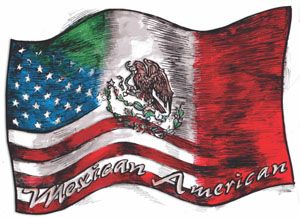
I wonder if being Mexican-American is something wrong
I hear my own people talking about me
I see how my American family wants me to be American
I want for my American family to know that I am Mexican
I am Ivette Labra

I pretend to be American yet Mexican
I feel so confused of who I am
I touch my face and wonder why it's mine
I worry to not know who I really am
I cry because it seems that no one understands
I am Ivette Labra

I understand that being Mexican-American is tough
I say it proudly because that is who I am
I dream to end this war
I hope for acceptance around the world
I am Ivette Labra


Image result for mexican american flag


Sunday, September 22, 2019

Blog #1


           On The Master’s Tools Will Never dismantle the Master’s House the overarching message that I took was that no matter how women were “positively” portrayed through the Master’s House things will always stay the same. Even if they were being heard by them, that didn’t mean change was coming their way for a better life as they thought so. For example, on the book This Bridge Called My Back, the following quote was stated, “For the master’s tools will never dismantle the master’s house. They may allow us temporarily to beat him at his own game, but they will never enable us to bring about genuine change” (Lorde, pg 95); meaning that change was nowhere to be find for these women as they hoped for. Sadly, these women depended on the Master’s House for hope and support that wasn’t there for them for comfort, as I found the following quote from This Bridge Called My Back; “And this fact is only threating to those women who still define the master’s house as their only source of support” (Lorde, pg 95). Again this only makes me question, how much are these women really willing to fight for what they want? I believe that in order for women to actually make a change, every single woman had to fight as one team regarding their skin color, education level, economic status, sex preference and so on, in order to succeed and make change.
Connecting to messages from And When You Leave Take Your Pictures With You and The Master’s Tools Will Never Dismantle the Master’s House I was able to see and feel the racism towards these women of color. Not only was it enough to be a woman of color but coming and being from a lower class made it even worse for them. As I read the section And When You Leave Take Your Pictures With You I absolutely felt the anger towards the “white privileged women” that are lucky to be so without even them recognizing it and expecting the rest to “educate” them about women of color. From the book, This Bridge Called My Back, I found this quote which ties up on what I have mentioned before; “Women of color do not have such power, but white women are born with it and the greater their economic privilege, the greater their power. This is how white middle-class women emerge among feminist ranks as the greatest propagators of racism in the movement” ( Carrillo, pg 58). Also, from The Master’s Tools reading I saw how again, it was the blacks and third world women task to educate white women about their existence which I totally disagree with because can they be aware of it and actually do something about it? Can the see how much of humans they are too?. “Now we hear that it is the task of black and third world women to educate white women, in the face of tremendous resistance, as to our existence, our differences, our relative roles in our joint survival. This is a diversion of energies and a tragic repetition of racist patriarchal thought” (Lorde, pg 96).
Why is it that in order to be “accepted” as an American we, Hispanics, should speak English the right way with no accent? This was the first thought that came to my mind as soon as I started reading the passage, How to Tame a Wild Tongue from the book, Borderlands La Frontera. Coming from a Mexican-American family growing up in Tijuana, Baja California, migrating to El Paso, Texas made me acquired all these extra language rules in order to fit in. For example, by all means I was not supposed to speak Spanish in the classroom in order to master the English language and speak it fluently as I remember my fifth grade teacher telling me. Of course, there I was listening to them and doing so since I didn’t know better. However, it now makes me angry because instead they couldn’t acknowledge the fact that I was bilingual? That I knew two languages rather than one, but they were too busy worrying about my Mexican accent. As I entered middle school, I started speaking Spanglish which was worse since my own family would even judge me and make fun of me but it was tto hard to remember all the words to one language, my brain automatically gave me  words in both languages and that’s how I was speaking. Finally, I was able to agreed and identified myself with the following quote from Borderlands La Frontera, “For a people who are neither Spanish nor live in a country in which Spanish is the first language; for a people who live in a country in which English is the reigning tongue but who are not Anglo; for a people who cannot entirely identify with either standard (formal, Castillian) Spanish nor standard English, what recourse is left to them but to create their own language? A language which they can connect their identity to, one capable of communicating the realities and values true to themselves a language with terms that are neither espanol ni ingles, but both” (Anzaldua, pg. 77).


References
Anzaldua Gloria. (2017). Borderlands: La Frontera. San Francisco, CA: Aunt Lute Books.

Moraga Cherrie, & Anzaldua Gloria. (2005). This Bridge Called My Back: writings by radical women of color. Albany: State University of New York Press.